How to Paint 3D Prints: A Technical Guide for Flawless Results
Learn exactly how to paint 3d prints for a flawless finish. Our technical guide covers sanding, priming, and coloring techniques for PLA, ABS, and Resin.
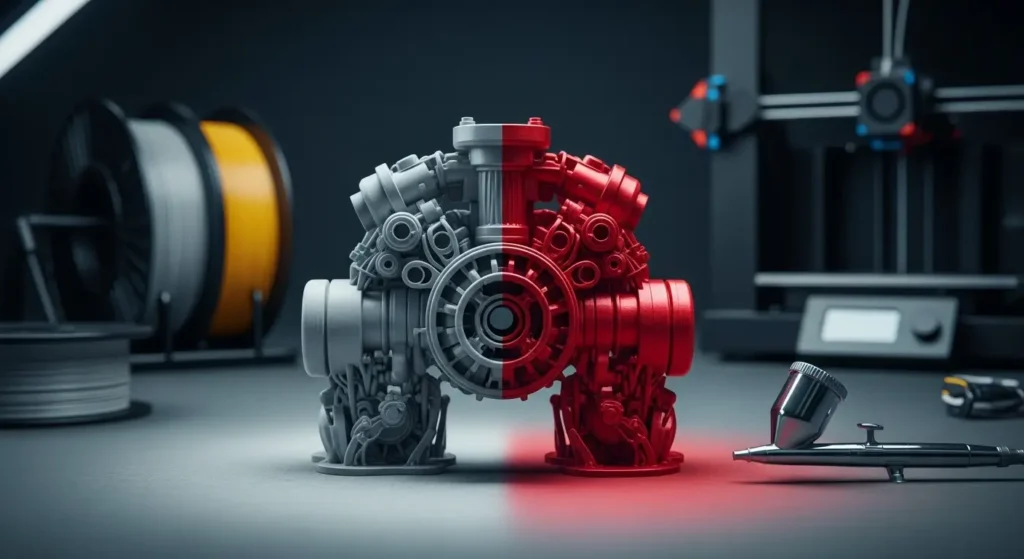
1. Material Assessment: Feasibility & Chemistry
In the world of additive manufacturing, the print itself is often just the canvas. Whether you are prototyping industrial parts or creating high-fidelity display pieces, mastering how to paint 3d prints is the final step to transforming a raw thermoplastic object into a professional product.
Before engaging in physical labor, we must address the material properties. A common inquiry in the industry is: can you paint 3d printed items effectively?
The answer is a definitive yes, provided you understand the substrate. Can you paint 3d printed models made of PLA, ABS, PETG, or SLA Resin? Yes, but each requires specific preparation.
- PLA/ABS: Porous enough for standard primers but requires heavy sanding to remove layer lines.
- Resin (SLA/DLP): Non-porous and smooth; requires thorough washing (IPA) to remove uncured resin before painting.
So, can you paint 3d prints immediately after they leave the build plate? No. Can you paint on 3d printed objects without preparation? Technically yes, but the paint will likely peel or highlight the layer lines.
2. Stage One: Surface Smoothing
If you want to know how to paint a 3d print that looks like injection-molded plastic, you must eliminate the layer lines.
A. Removal of Supports and Debris
Begin by removing support structures with flush cutters. If you are wondering, “can i paint 3d printed objects with support nubs left on?” the answer is no—paint will exaggerate these imperfections.
B. Wet and Dry Sanding
This is the most critical step in learning how to paint 3d printed objects.
- Low Grit (100-200): Start here to knock down heavy layer lines.
- Medium Grit (400-600): Smooth the scratches left by the low grit.
- Wet Sanding: Use water to prevent friction heat, which can warp PLA.
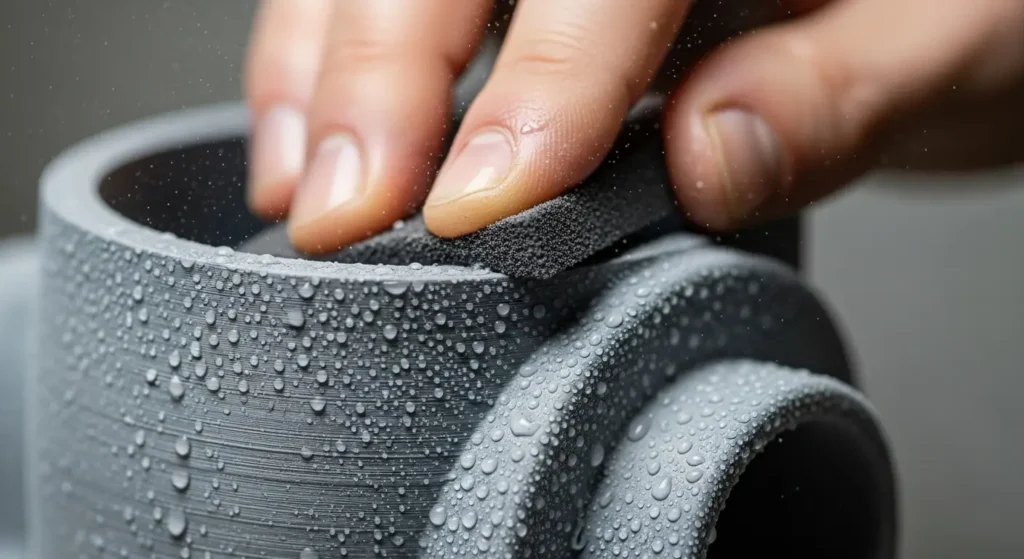
A close-up, high-resolution macro photography shot of a hand sanding a gray PLA 3D printed mechanical part. The focus is on the texture difference between the rough layer lines and the smoothed sanded area. Professional workshop lighting, neutral background, dust particles visible in the air, highlighting the wet sanding process with water droplets on the surface.
3. Stage Two: Priming the Substrate
When determining how to paint a 3d printed object for maximum durability, you cannot skip the primer. Primer acts as the interface between the plastic and the paint.
- Filler Primer: For FDM prints (filament), use a high-fill primer. It helps fill microscopic gaps between layers.
- Application: Apply in thin coats. Many beginners fail when learning how to paint 3d printed items because they spray too heavily, obscuring fine details.
Once primed, inspect the model. Can you paint a 3d printed object if the primer looks rough? No, you must sand the primer again with high-grit sandpaper (600+) until it is glass-smooth.
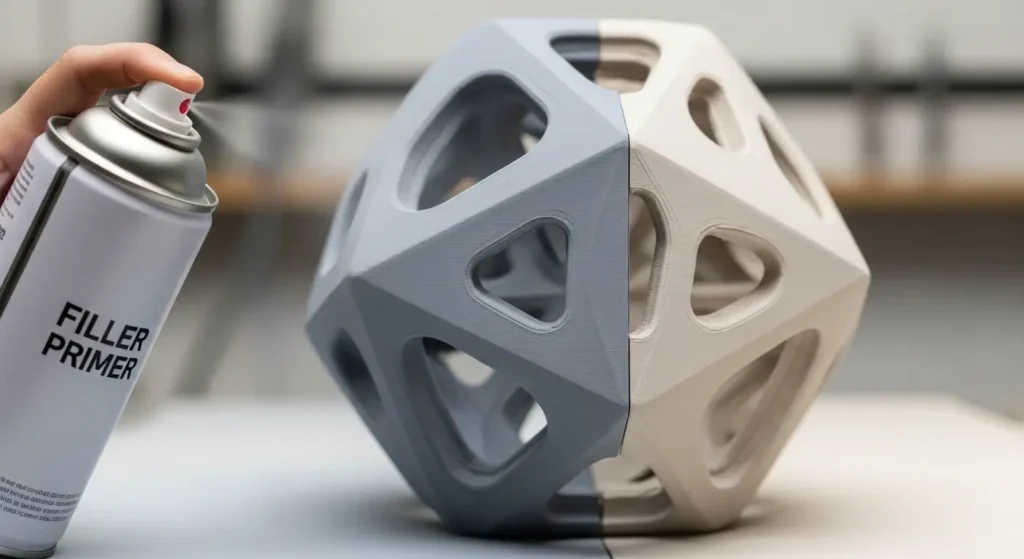
A studio shot of a 3D printed model (complex geometric shape) being spray primed. The model is half-gray (primed) and half-raw filament color, showing the transition. A spray can of “Filler Primer” is visible in the foreground, slightly out of focus. Soft, diffused lighting to show the matte finish of the primer. Professional workspace environment.
4. Stage Three: Painting Techniques
Now that the surface is prepped, we move to the aesthetics of how to paint 3d models.
A. Airbrushing vs. Hand Painting
For professional results, airbrushing is preferred for base coats and gradients. It applies the thinnest layer of pigment possible. However, when learning how to paint a 3d printed model with intricate details, high-quality acrylics and a fine-point brush are necessary.
B. Layering
Apply your base coat first. How to paint 3d print details requires patience; wait for the base coat to fully cure before applying washes or highlights.
5. Frequently Asked Questions
Technical answers to common variations regarding adhesion and finish.
Q: Can I use spray cans?
Yes. Use short, controlled bursts from 8-10 inches away. Do not start or stop the spray directly on the model to avoid drips.
Q: How to protect the paint?
You must apply a clear coat (varnish). Matte, satin, or gloss sealants will protect the paint from oils on human skin.
Q: Can I paint flexible (TPU)?
You need specialized flexible paints or rubberized coatings. Standard acrylics will crack when the part bends.
Final Thoughts
Mastering this skill takes practice. By following these steps—sanding, priming, and careful layering—you solve the puzzle of how to paint 3d prints professionally. Whether for prototyping or art, the result will be a seamless, high-quality object that defies its printed origins.